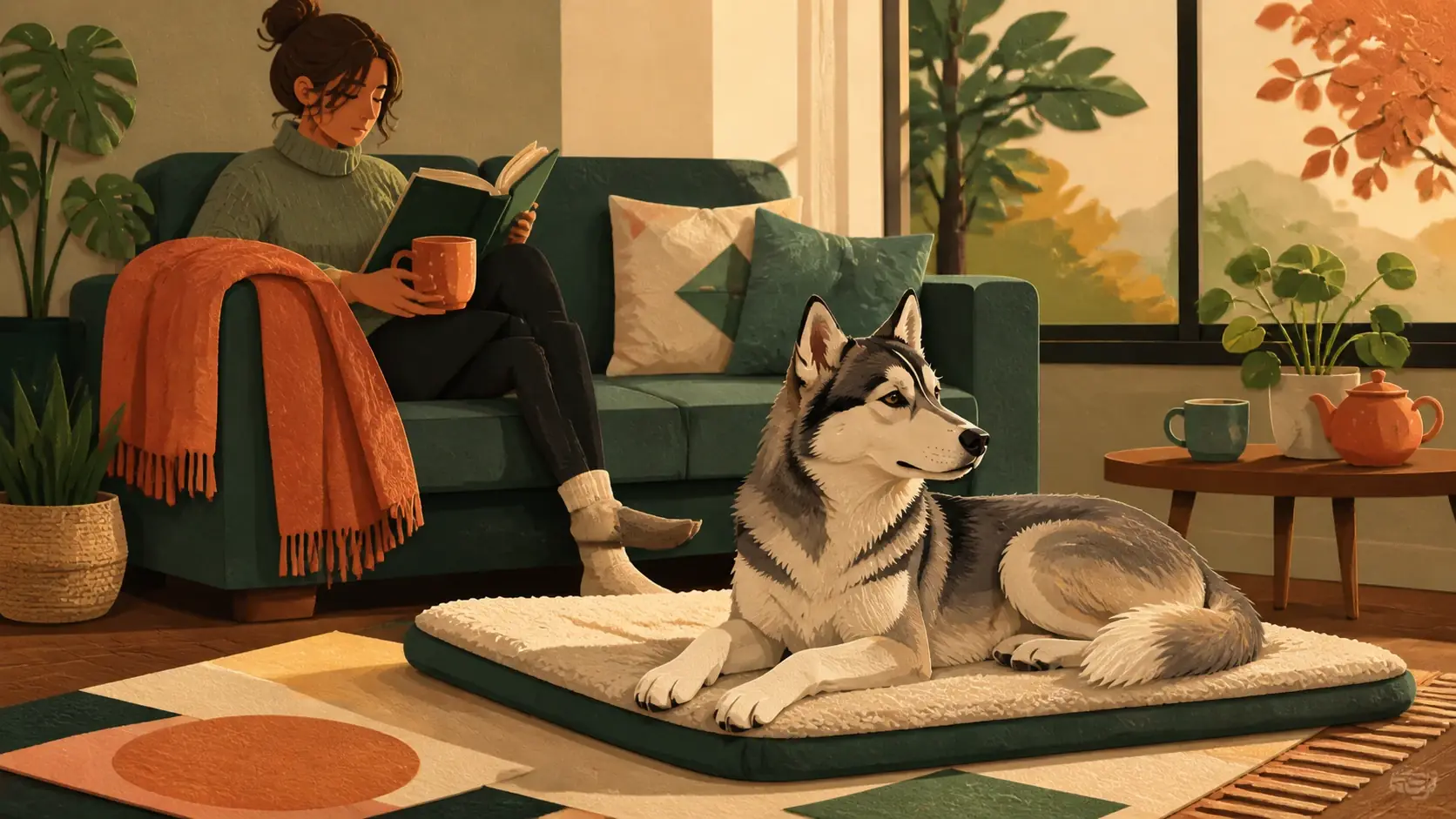

Yes. Calm is a learnable behavior, and you teach it the same way you teach sit: by rewarding it. Pay your Husky for lying down quietly, teach a settle on a mat, and build a day that mixes physical exercise, brain work and real rest. Most Huskies who never seem to switch off are short on mental work, overtired, or both, rather than simply wired that way.
The main exception is a dog whose restlessness looks more like worry than excitement. Pacing, panting, trembling or a sudden change in how your dog settles can be a sign of pain, illness or anxiety, and it's worth a vet check before you treat it as a training project.
Teaching a Husky calm at a glance
| Can it be taught | Yes, by rewarding relaxed behavior |
|---|---|
| Core skill | A settle on a mat, built in small steps |
| Best time to practice | After a walk, when the edge is off |
| Daily mix | Exercise, sniffing and puzzles, plus downtime |
| Skip | Shock, prong collars and punishment |
| Call your vet | Sudden restlessness, pacing or signs of stress |
Calm is a behavior you can pay for
Most of us only notice our dogs when they're doing something we'd rather they didn't. A Husky lying quietly by the couch gets ignored, while a Husky yodeling at the window gets eye contact, words and maybe a treat to make it stop. Without meaning to, we reward the noise and skip the quiet.
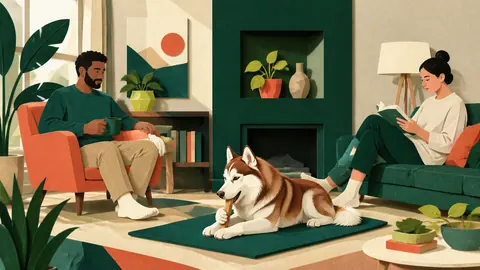
Flip that around. When your dog lies down on their own, walk over and quietly place a treat between their paws, then walk away without a fuss. Trainers call this capturing. It works because dogs repeat what pays, and calm is no exception.
Delivery matters. Keep your voice low and your movements slow, and choose a food reward that's tasty but not so exciting your Husky leaps up to look for more. If every treat sends them bouncing, try a slightly less thrilling one, or drop it gently instead of handing it over.
Why Huskies find switching off hard
Huskies were bred to run for hours, so calm is a skill you have to build. The AKC notes the breed's great endurance, and that's a dog built to keep going all day. Put that engine in a living room with nothing to do and it tends to find its own entertainment.
Huskies are also social, chatty and quick to join in when the household gets lively. Loud greetings, fast play and excited voices tend to rev them up rather than wear them down. A Husky can still learn calm, but it usually has to be taught on purpose, and the day has to give that big engine a proper outlet first.
Age plays a part too. Puppies and adolescents have shorter fuses and need more sleep than many owners expect, so a young Husky's wild evening often says more about the day they've had than about their personality.
Teaching a settle on a mat
A mat gives calm a place to live. The AKC's approach to teaching a dog to go to a mat is fully reward-based and moves in small pieces, starting with any interest in the mat and ending with a dog who heads there on cue and stays relaxed. It helps if your Husky already knows how to lie down and has a release word such as "free" that tells them they can get up.
- Put the mat down. Use a bath mat, blanket or small bed. Reward any sniff, glance or paw that touches it, and place treats on the mat so it starts to feel like a good spot.
- Build up to four paws. Reward two paws on the mat, then all four. Toss a treat off the mat to reset, use your release word, and wait for your dog to choose to step back on.
- Add the down. Once your Husky is on the mat, ask for a down and reward it there. Wait a beat longer for a relaxed hip roll or a head resting on the paws, and reward that too.
- Stretch the time. Slowly wait longer between treats. Work on one of the three Ds, distance, duration or distraction, at a time, as the AKC recommends.
- Take it on the road. Practice in different rooms, then quieter spots outside the home. Add a cue like "mat" or "place" once your dog is reliably going there.
Practice when they're already a little tired
Teaching calm to a Husky at full throttle is a bit like teaching meditation at a rock concert. Try short mat sessions after a walk, a sniffy outing or a training game, when your dog is more likely to want to lie down anyway. You're setting them up to get it right.
If your Husky keeps popping up, that's useful information. Go back a step, reward faster and make the job easier. A few calm minutes is a good session. End while it's going well, and don't stack a mat session on top of a day that's already been too much.
Your own energy counts here. A slow, quiet handler makes it easier for a dog to soften. Bright, excited praise is great for recall, but it can undo a settle in seconds.
Adding small distractions bit by bit
Once your Husky can relax on the mat for a minute or two, start making ordinary household life part of the exercise. Take one step away and come back. Stand up from your chair. Open a cupboard. Touch the door handle. After each small change, return and quietly reward your dog for staying settled.
The goal is a dog who learns that normal activity is no reason to get up. Build in tiny steps, mix easy moments in with harder ones, and if your dog breaks the settle, make the next step smaller. Big distractions, like the doorbell or a visitor arriving, come much later.
If your dog seems genuinely worried rather than just excited, for example when you leave the room, this is a different problem. Separation anxiety in Huskies is its own topic, and a veterinary behaviorist can tailor a plan.
Balancing exercise, brain work and rest
Exercise matters for a breed like this, but more running alone can simply build a fitter dog who needs even more running. Calm comes more easily from a day that mixes movement with thinking and with proper downtime. For the physical side, see how much exercise a Husky needs.
For the brain, the ASPCA recommends regular enrichment that lets dogs do natural things like sniffing, chewing, chasing and scavenging. It also notes that dogs who don't get enough stimulation tend to find their own ways to entertain themselves, which usually means unwanted behaviors. Sniffing earns special mention from the ASPCA as both stimulating and calming.
- Slow sniff walks where your Husky picks the pace and the route
- Scatter feeding part of a meal in the grass
- Snuffle mats and simple food puzzles
- Hide-and-seek games with treats around the house
- Short, upbeat training sessions
- A safe chew to wind down with afterward
Spotting an overtired Husky
An overtired dog often looks exactly like a dog who needs more exercise. They get mouthy, race around, ignore cues they know well and seem unable to stop, even though they're clearly running on fumes. Late-evening Husky zoomies after a busy day are a classic example.
The fix is usually a quiet space, a chew and a chance to sleep, not another game of fetch. A crate or gated area with a comfy bed works well if your dog is already happy there. Treat rest as a normal part of the day rather than a reward for good behavior.
Probably needs more to do
- Restless after a quiet, home-bound day
- Bringing you toys over and over
- Settles nicely after a walk or puzzle
Probably needs a nap
- Wild and bitey after a busy day
- Can't settle even when clearly tired
- Ignoring cues they usually know
- Frantic play late in the evening
Why punishment backfires
There's no tool that installs calm. The American Veterinary Society of Animal Behavior recommends using reward-based training only, and says there is no evidence that aversive methods such as shock or pain-based tools are more effective. Its position statement links aversive training to signs of stress, higher cortisol and increased risk of fear and aggression.
That matters for calm in particular. A dog who has shut down because they're afraid can look quiet on the surface while feeling worse underneath. Reward-based training builds a dog who settles because they're comfortable, which is the kind of calm that lasts.
If you notice pacing, panting, trembling, hiding or trouble settling that seems linked to stress, or a change from your dog's normal, call your vet first to rule out pain or illness. After that, a certified reward-based trainer or a veterinary behaviorist can help you build a plan.
Husky calm questions
Questions about calming a busy Husky.
At what age do Huskies calm down?
Many settle somewhat as they leave adolescence behind, but energy stays high in this breed. Teaching calm early helps far more than waiting for age to do it.
Will more exercise make my Husky calmer?
Up to a point. Past that, you mostly build stamina. Adding sniffing, puzzles and rest usually helps more than extra miles.
How long until mat training works?
It varies from dog to dog. Short, frequent sessions and small steps tend to get the steadiest results.
Should I use a calm cue word?
You can, but add it once your dog is reliably settling on the mat. A word added too early just becomes background noise.
Is my Husky hyper or anxious?
Excited dogs are usually loose and bouncy. Pacing, panting, trembling or hiding can be a sign of stress or discomfort and is worth a vet check.
A small way to put this to work
Keep a few treats in your pocket today and quietly place one between your Husky's paws every time they lie down on their own.
Sources and further reading
The research and expert guidance behind this page, if you want to dig deeper.
- American Kennel ClubTeaching a dog to go to a place or mat with rewards, including the three Ds
- American Kennel ClubSiberian Husky breed profile, including its sled dog origins and endurance
- ASPCAEveryday enrichment ideas for dogs and why sniffing is calming
- American Veterinary Society of Animal BehaviorPosition statement on humane, reward-based dog training and the risks of aversive methods
While the zoomies settle
 TrainingShould a Husky wear a harness or a collar?
 TrainingDoes a Husky need training every day?
 Senior HuskiesWhy is my old Husky sleeping so much?
 Husky 101Can a Husky live in an apartment?
 BehaviorAre Huskies aggressive?
 Health & CareIs it a vet emergency, or can it wait?